

 en
 ru
 sa
 es


Nov, 12, 2026
Car Wrapping Guide 2026: Car Color-Change Wrap Cost, Types and Care
Content
- 1 The Short Answer: Is Car Wrapping Worth It in 2026?
- 2 What a Car Color-Change Wrap Actually Is
- 3 How Car Wrapping Works From Start to Finish
- 4 Car Wrapping Cost in 2026
- 5 Car Color-Change Wrap Versus a New Paint Job
- 6 Film Types: Cast, Calendered and Color PPF
- 7 Finishes That Change How a Car Wrap Looks and Wears
- 8 Films for Car Wrapping From Ginnva Films
- 9 How to Choose the Right Color for a Car Color-Change Wrap
- 10 Full Wrap, Partial Wrap or Accent: Which Coverage Fits
- 11 How Long a Car Wrap Lasts and What Shortens It
- 12 Caring for a Wrapped Car Week to Week
- 13 Wrap Plus Protection: Pairing Color Change With PPF and Window Film
- 14 Choosing a Car Wrapping Installer
- 15 DIY Car Wrapping Versus Professional Installation
- 16 Removing a Wrap and Protecting Resale Value
- 17 Common Car Wrapping Mistakes to Avoid
- 18 Pre-Booking Checklist for a Car Color-Change Wrap
- 19 Frequently Asked Questions About Car Wrapping
- 19.1 How much does a full car color-change wrap cost?
- 19.2 How long does a car wrap last?
- 19.3 Is a wrap cheaper than a paint job?
- 19.4 Will a wrap damage my original paint?
- 19.5 How long does the installation take?
- 19.6 Can I wash a wrapped car in an automatic car wash?
- 19.7 What is the difference between a vinyl wrap and color PPF?
- 19.8 Which finish is easiest to maintain?
- 19.9 Can I wrap only part of my car?
- 19.10 Can a wrap hide scratches and dents?
- 19.11 Can a wrap be applied to a leased car?
- 19.12 Should I add window film or paint protection film to a wrapped car?
- 19.13 How do I know if a quote is fair?
The Short Answer: Is Car Wrapping Worth It in 2026?
For most drivers, yes. A car color-change wrap costs roughly $2,500 to $6,000 at a reputable shop using quality cast vinyl, it changes the look of the car completely, and it can be peeled off later to reveal the original paint. A comparable repaint in a new color usually costs more and cannot be reversed.
The result depends on three things: the film you choose, the quality of surface preparation, and the skill of the installer. Cast vinyl from a major film maker, a clean and sound paint surface, and an experienced installer will give you roughly 5 to 7 years of good appearance in normal conditions. Cheap calendered film or rushed prep can fail in one to two years.
The rest of this guide covers how car wrapping works, current pricing, film types, finishes, installation, care, removal and the questions worth asking before you book.
What a Car Color-Change Wrap Actually Is
A color-change wrap is a thin, flexible vinyl film applied over the painted surfaces of a vehicle. Avery Dennison describes color change film as a cast vinyl on a specialized adhesive, built to stretch and mold to the contours of the car so the finish looks smooth and seamless.
The film is a surface layer, not a coating. Your factory paint sits underneath, which is why car wrapping is popular with leased vehicles, newer cars with paint you want to keep, and owners who like to change their minds. A wrap can cover the whole body for a total color change, or just the roof, hood, mirrors and trim for an accent.
Color-change films are different from printed commercial wraps. A printed wrap carries graphics and a protective laminate. A color-change film is a solid color or effect built into the film itself, so edges, door jambs and recesses look like paint when the installer does the job properly. Because of that, color-change work usually involves more disassembly of trim, handles and lamps than a printed fleet graphic.
Source: Avery Dennison, "Taking Command of Color" Q&A; Digital Output, "Color Change Films for Vehicle Wraps."
How Car Wrapping Works From Start to Finish
A proper car wrap is a sequence of steps, and the steps that happen before the film touches the car matter as much as the application itself.
- Inspection: The installer checks for rust, peeling clear coat, dents and old repaint. Film bonds to sound paint, and weak paint can lift with the film at removal.
- Deep cleaning: The car is washed, decontaminated and wiped with a panel prep solution so no wax, grease or road film remains.
- Disassembly: Handles, badges, lamps, bumper trim and sometimes mirrors come off so the film can wrap into edges instead of stopping at them.
- Film layout and application: The film is cut oversize, positioned with low tension, squeegeed down, and heated where it must stretch into curves.
- Trimming and edge work: Excess film is trimmed with a blade or knifeless tape, and edges are tucked and sealed.
- Post-heating: Stretched areas and edges are heated to a set temperature so the film remembers its new shape and does not creep back.
- Reassembly and curing: Parts go back on, and the car rests so the adhesive can reach full bond.
3M suggests leaving the vehicle with the shop for an extra day after a full wrap so adhesion can settle. A Chicago-area wrap shop publishes a typical full color-change timeline of about five to seven business days, including disassembly, preparation, wrapping and reassembly. Partial wraps take much less time.
Source: 3M Car Wrap Films product page; Chicago Auto color change wraps service FAQ.
Car Wrapping Cost in 2026
Pricing varies by region, vehicle and finish, but published 2026 guides agree on a general range. TunedRides puts most full wraps at $2,500 to $6,000 using quality cast vinyl, with compact cars near the low end and trucks and SUVs near the high end. Blackout, a California tint and wrap shop, lists full color-change wraps starting around $2,500 and partial wraps from about $400.
| Vehicle Size | Examples | Full Wrap Cost |
|---|---|---|
| Compact or coupe | Civic, Corolla, MX-5 | $2,500 to $3,500 |
| Sedan or sports car | 3 Series, Mustang, Charger | $3,000 to $4,500 |
| Truck | F-150, Ram 1500, Silverado | $3,500 to $5,500 |
Material Versus Labor
The film is the smaller part of the bill. One 2026 cost breakdown from Vinyl Wrap Calculator estimates the film for a sedan at about $250 to $400, with professional labor running $800 to $1,800 for a sedan, $1,000 to $2,500 for an SUV or truck, and $1,500 to $3,500 for a van. That gap explains why a very cheap quote usually means thin prep, thin film or both.
What Pushes the Price Up
- Complex bodywork: Deep recesses, scoops and sharp creases need more time and more film.
- Specialty finishes: Chrome, color-shift and some textured films cost two to three times standard gloss, according to a Blackout vinyl guide.
- Door jambs and hidden areas: Wrapping the edges that show when doors open adds hours of work.
- Paint condition: Rough or damaged panels may need repair before wrapping.
- Local labor rates: Big-city shops with a strong portfolio charge more than small-town shops.
Source: TunedRides, "Car Wrap Cost in 2026"; Blackout, "Car Wrap Cost 2026"; Vinyl Wrap Calculator, "How Much Does a Vinyl Wrap Cost in 2026."
Car Color-Change Wrap Versus a New Paint Job
The honest comparison depends on what you value. Paint is permanent and can last for decades if the work is good. A wrap is reversible and costs less for a color change, but it has a defined service life.
| Factor | Car Wrap | Quality Paint Job |
|---|---|---|
| Solid color cost | $3,000 to $5,500 | $5,000 to $8,000 |
| Specialty finish cost | $5,000 to $8,000 | $10,000 to $20,000 or more |
| Reversible | Yes | No |
| Original paint preserved | Yes, under the film | Replaced |
| Typical service life | 5 to 7 years for cast film | Long term |
If your factory paint is in good shape and you want a new color for a few years, a wrap is the stronger choice. If the paint is already failing, a wrap will not hide it for long, and repainting first may be the better path.
Film Types: Cast, Calendered and Color PPF
Not every film sold for car wrapping is built for a full vehicle. The manufacturing method decides how well the film stretches, how long it lasts and how it behaves in heat.
| Film Type | Full Wrap Range | Typical Life | Best Use |
|---|---|---|---|
| Calendered vinyl | $1,500 to $3,000 | 3 to 5 years | Flat panels, short-term use |
| Cast vinyl | $2,500 to $5,000 | 7 to 10 years | Full color change |
| Premium cast vinyl | $3,500 to $7,000 or more | 10 years or more | Complex curves, top-tier brands |
Life figures in vendor guides are best-case numbers. Blackout, for example, quotes 5 to 7 years for cast vinyl and 3 to 5 years for calendered film, which is a more cautious range. Plan around the lower figures and treat the upper figures as a bonus for a garaged car.
Cast Vinyl
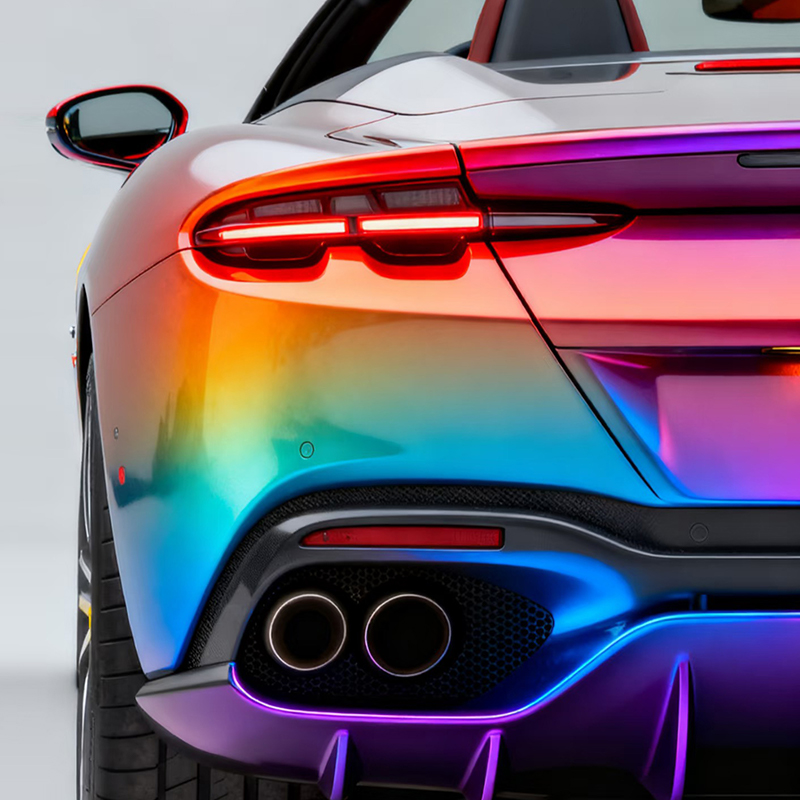
Cast film is made by spreading liquid vinyl onto a sheet and curing it, which produces a thin, relaxed film with little built-in tension. It conforms to bumpers, mirrors and door handles without trying to shrink back. Most major color-change lines are cast. ORAFOL's color-change portfolio lists 97 colors, and its 970RA premium wrapping cast is a 4.25 mil film sold in 60 inch wide rolls. Avery Dennison's Supreme Wrapping Film range has more than 100 colors, and 3M advertises nearly 100 colors, textures and finishes.
Calendered Vinyl
Calendered film is rolled and flattened, which makes it thicker, cheaper and more likely to shrink over time. It works for flat or gently curved surfaces and short promotions. On deep recesses it tends to lift at the edges. Shops that use it for full color changes often quote one to two years before edge lifting and fading become visible, as noted in the TunedRides guide.
Color PPF
Color paint protection film combines a color change with a protective TPU layer. Tint World notes that XPEL Color PPF is 8 mils thick, while vinyl wrap films are usually 3 to 4 mils and are mainly used for appearance. The thicker film resists rock chips and light scratches, and it can self-heal minor marks with heat. The trade-offs are a higher price, a smaller color range and a more demanding installation.
Source: Vicrez installer guide; Blackout vinyl wrap guides; Digital Output on ORAFOL and Avery Dennison portfolios; 3M Car Wrap Films; Tint World on XPEL Color PPF; TunedRides.
Finishes That Change How a Car Wrap Looks and Wears
Color is only half the decision. Finish changes how light plays across body lines, how much care the car needs, and how forgiving the surface is.
Gloss
Gloss is the closest match to factory paint and the most common choice for a solid color change. Blackout lists gloss solids as the widest color selection and the most common full-wrap request. Gloss shows swirl marks from careless washing more readily than matte, so hand washing matters.
Satin
Satin sits between gloss and matte. It softens reflections, which highlights body shape without a mirror effect, and it hides light dust better than gloss. Satin black, satin gray and satin pearl tones are popular on sports cars and performance sedans.
Matte
Matte films scatter light and give a flat, modern look. They need dedicated matte-safe cleaners, because wax and polish leave shiny patches. Oil from fingerprints and bird droppings should be cleaned quickly.
Metallic and Pearl
Metallic flakes and pearl particles add depth. These finishes forgive minor surface imperfections better than flat colors, and they often look closest to a premium factory paint.
Chrome and Color-Shift
Chrome films have little stretch and show every flaw in the surface and every seam. Color-shift films change hue depending on light angle, which is why they are priced higher. Sign Warehouse describes the shift effect as light bouncing off the film to reveal several colors as the viewing angle changes. Both finishes call for an installer with proven experience, since errors are hard to hide.
Films for Car Wrapping From Ginnva Films
If you are sourcing material for a car color-change wrap, a color-protection project or a full vehicle film package, these are the product groups worth looking at together. Each one covers a different part of the same job.
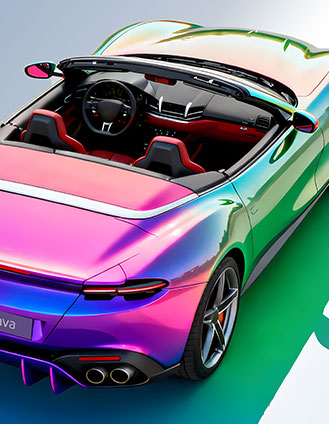
Car Color-Change Wrap Film
Solid color, satin, matte and metallic films for full-body and partial car wrapping.
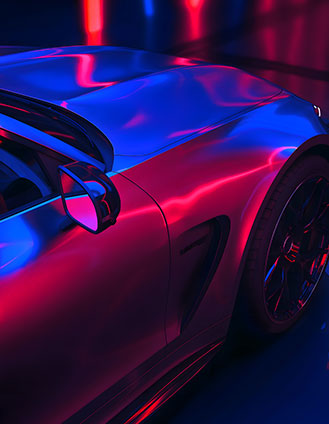
Clear Paint Protection Film
Transparent film for hoods, fenders, bumpers and mirrors, often paired with a wrap on the remaining panels.
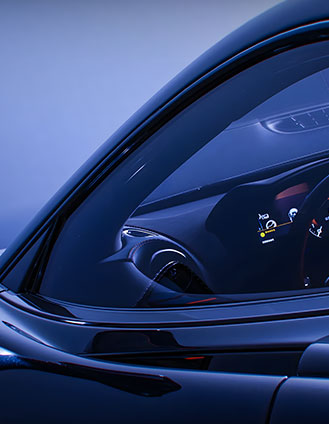
Automotive Window Film
Heat-rejecting window film that completes a vehicle makeover and keeps the cabin cooler.
How to Choose the Right Color for a Car Color-Change Wrap
A swatch on a counter looks different from the same film on a curved door in full sun. Use these checks before you commit.
- See the film outdoors: Ask for a large sample and look at it in daylight, shade and evening light.
- Match finish to body style: Strong body lines suit satin and gloss. Flat, slab-sided panels suit metallic and pearl, which add visual depth.
- Think about the original color: Light-to-dark changes are easy to hide at the edges. Dark-to-light changes can show the old color in door jambs unless the jambs are wrapped.
- Consider upkeep: Dark and matte colors show dust and water spots quickly. Mid-tone grays, silvers and satin pearls are the easiest to live with.
- Preview digitally: Many shops and online tools can render your car in a chosen wrap color before any film is cut.
Full Wrap, Partial Wrap or Accent: Which Coverage Fits
You do not have to wrap the whole car. 3M groups car wrapping into partial coverage, such as a hood or roof, and full coverage for a complete color change. The right choice depends on budget and goal.
| Coverage | Typical Cost | Best For |
|---|---|---|
| Roof, mirrors or trim | From about $400 | Gloss black accents, two-tone looks |
| Hood and roof | $500 to $1,500 | Sun-faded panels, sporty contrast |
| Half wrap, upper or lower | $1,500 to $2,500 | Two-tone design on a budget |
| Full color change | $2,500 and up | Complete transformation |
A roof wrap is one of the best value moves in car wrapping. It is a large, flat, highly visible panel, and it is also the surface that suffers most from sun and heat.
How Long a Car Wrap Lasts and What Shortens It
Lifespan is not a single number. Blackout notes that it depends on the film, the finish and how much sun the car gets, and that prolonged direct sun speeds up fading, especially on darker finishes. Garage parking or a car cover can add years.
| Factor | Effect on Life |
|---|---|
| Covered or garage parking | Adds time, mainly by cutting UV exposure |
| Hand washing with pH-neutral soap | Protects edges and surface |
| Dark colors in strong sun | Faster fading, higher heat load |
| Close-range pressure washing | Lifts edges and shortens life |
| Budget calendered film | Shorter life regardless of care |
Horizontal surfaces such as the hood, roof and trunk lid take the most UV and heat, so they usually show age first. If you notice dulling or small cracks on those panels, schedule removal before the film hardens and becomes harder to peel.
Caring for a Wrapped Car Week to Week
Wrap care is simple, but it is different from paint care. Most problems come from habits that are harmless on paint and rough on vinyl.
Do
- Hand wash with a soft mitt and pH-neutral soap, using the two-bucket method.
- Rinse bird droppings, fuel spills and insects off quickly. Blackout advises dealing with contaminants right away.
- Use a spray product made for vinyl as a light protectant, applied once or twice a year.
- Park in shade or a garage when you can.
Avoid
- Automatic car washes with brushes, which scratch film and catch edges.
- Pressure washing within a short distance of seams and edges.
- Wax or polish on matte and satin films, which leave shiny patches.
- Solvent-based cleaners and abrasive pads.
Wrap Plus Protection: Pairing Color Change With PPF and Window Film
Vinyl gives color, but it offers little defense against rock chips. Market coverage in 2026 points to a growing habit of combining color-change vinyl with clear paint protection film on the panels that take the most impact, such as the front bumper, hood leading edge, fenders and mirrors.
A practical layout looks like this:
- High-impact front end: Clear or color PPF.
- Doors, quarter panels, roof and rear: Color-change vinyl.
- Windows: Heat-rejecting film that reduces cabin heat and glare.
This approach spreads cost where it matters. You get protection on the panels that actually get hit and a rich color across the rest.
Choosing a Car Wrapping Installer
The installer decides the final result more than the film brand does. Digital Output reports that cutting must be precise on color-change work because errors are impossible to hide, unlike a printed install where graphics can mask them. Before booking, check these points.
- Portfolio of finished cars: Look for close-up photos of edges, corners and door jambs, not only wide shots. Blackout lists a missing portfolio as a warning sign.
- Named film and line: The quote should state the brand and product series, not just "premium vinyl."
- Disassembly plan: Ask which parts come off and which are wrapped in place.
- Indoor install bay: Dust, wind and temperature swings cause bubbles and poor adhesion.
- Timeline and pickup: A full wrap usually takes several days, and the car should rest briefly after finishing.
- Aftercare instructions: A good shop gives written care steps and a recheck visit for lifted edges.
Source: Digital Output, "Color Conversion"; Blackout car wrap pricing guide.
DIY Car Wrapping Versus Professional Installation
Doing it yourself saves labor, which is the largest part of the cost. It also carries real risk. A full car needs 50 to 75 feet of film for most sedans, a clean indoor space, heat tools, knifeless tape and a lot of patience. Mistakes on a bumper or mirror cap mean re-cutting a panel and buying more film.
| Factor | DIY | Professional |
|---|---|---|
| Film cost | About $250 to $400 | Included in quote |
| Labor | Your time, often several weekends | $800 to $1,800 |
| Finish quality | Varies with practice | Consistent, edge sealed |
| Best suited to | Roofs, mirrors, trim, small panels | Full body, chrome, color-shift |
A sensible middle path is to practice on a small accent, such as a mirror cap or a trim piece, and leave the full body to a professional.
Removing a Wrap and Protecting Resale Value
Removal is where the "reversible" promise gets tested. On sound factory paint, a wrap in good condition comes off with heat and steady pulling, and the paint underneath is usually preserved in its original state. Film that has been baked by years of sun, or applied over repaint or damaged clear coat, can leave adhesive residue or lift weak paint.
Tips for a Clean Removal
- Remove the wrap before it is badly aged. Brittle film pulls off in small pieces.
- Use a professional shop with steamers and adhesive removers made for automotive paint.
- Warm the panel before peeling, and pull at a low angle.
- Wash and inspect the paint afterward, then wax or coat it.
For resale, a wrap that was removed cleanly can show buyers a car with intact original paint. If you sell while the wrap is still on, ask the buyer whether they want it left in place, and keep the film brand, color name and install date on record.
Common Car Wrapping Mistakes to Avoid
- Choosing on price alone: The cheapest quote often uses calendered film and minimal prep, and the result may need redoing within two years.
- Wrapping over damaged paint: Peeling clear coat, rust and loose body filler will show through and can come off with the film.
- Skipping disassembly: Cutting around handles and lamps leaves visible seams that collect dirt and lift early.
- Ignoring the finish's upkeep: Matte and chrome look excellent on day one and need more attention than gloss.
- Using an automatic wash: Brush washes are a leading cause of edge lifting and scratches.
- Leaving the car in direct sun all day: The film ages faster, particularly in dark colors.
Pre-Booking Checklist for a Car Color-Change Wrap
- Inspect your paint for chips, rust and failing clear coat, and repair what needs repair first.
- Pick a finish and color after viewing a large sample outdoors.
- Decide on coverage: full body, partial, or accent panels.
- Request two or three itemized quotes naming the film brand and series.
- Ask about door jamb wrapping, disassembly and the install bay.
- Plan a protection layer for the front end if you drive highways often.
- Get written aftercare instructions and schedule an edge check after the first few weeks.
Frequently Asked Questions About Car Wrapping
How much does a full car color-change wrap cost?
Most 2026 guides place a full car color-change wrap between $2,500 and $6,000 at a reputable shop using cast vinyl. Compact cars sit near $2,500 to $3,500, sedans and sports cars near $3,000 to $4,500, and trucks and SUVs near $3,500 to $5,500. Specialty finishes such as chrome and color-shift cost more.
How long does a car wrap last?
Quality cast vinyl typically lasts 5 to 7 years with good care, and some premium films reach longer in mild climates. Calendered film usually lasts 3 to 5 years, and budget installs may show problems in one to two years. Sun exposure, finish and washing habits make the biggest difference.
Is a wrap cheaper than a paint job?
For a color change, usually yes. A solid-color wrap costs roughly 30 to 50 percent of a quality respray in many shop guides, and the gap grows for specialty finishes. A wrap can also be removed, while paint cannot be reversed.
Will a wrap damage my original paint?
On sound factory paint, a wrap generally protects it from sun and light abrasion. Problems arise when film is applied over repainted, peeling or poorly bonded surfaces, since weak paint can lift at removal. Have an installer inspect the paint before you commit.
How long does the installation take?
A full color change commonly takes about five to seven business days, including disassembly, prep, wrapping and reassembly. Partial wraps such as a roof or hood can often be done in a day. Leaving the car an extra day after finishing helps the adhesive settle.
Can I wash a wrapped car in an automatic car wash?
Brush washes are best avoided, since the bristles can scratch the film and catch edges. Hand washing with pH-neutral soap is the safest method. A touchless wash is less risky, but high-pressure jets should stay away from seams.
What is the difference between a vinyl wrap and color PPF?
Vinyl is mainly for appearance and is typically 3 to 4 mils thick. Color PPF is a TPU protection film, such as the 8 mil XPEL Color PPF, that adds impact resistance and self-healing to the color change. Color PPF costs more and has a narrower range of colors.
Which finish is easiest to maintain?
Gloss and satin mid-tone colors such as gray, silver and pearl are the easiest to keep clean. Matte shows oil and water spots and needs matte-safe cleaners. Chrome and very dark colors need the most attention.
Can I wrap only part of my car?
Yes. Roof, hood, mirrors, trim and half-body wraps are all common. Partial wraps start from about $400 and are a good way to try a color or finish before committing to the whole vehicle.
Can a wrap hide scratches and dents?
Vinyl hides faint color differences, but it follows the surface beneath it, so dents, deep scratches and rough repairs usually show through. Body damage should be repaired before wrapping.
Can a wrap be applied to a leased car?
Wraps are popular on leased cars because the film can be removed before the car is returned, leaving the original paint in place. Confirm the process with your leasing company first, and keep a record of the install and removal dates.
Should I add window film or paint protection film to a wrapped car?
Many owners do. Clear PPF on the front bumper, hood edge and mirrors reduces chip damage, and window film lowers cabin heat and glare. Doing them in the same booking can reduce the time the car spends in the shop.
How do I know if a quote is fair?
Compare it with the size-based ranges in this guide, then check that the quote names the film brand and series, lists door jamb and disassembly work, and states the timeline. A quote far below the market range often means thin prep or budget film.
We provide customers with sustainable and eco-friendly adhesives, Automotive Film, customized material solutions and comprehensive technical services.
 Download
Choose Ginnva Auto Film for the perfect blend of performance and aesthetics.

- ADD: 17Floor, Buillding 8,G60 Ke Chuang corridor,No288, Qian Fan Road, XinQiao Town,Songjiang District, Shanghai, China
- Whatsapp: 8618041123913
- Email: info@ginnvafilm.cn
Copyright © Ginnva Auto Film Rights Reserved. China vehicle protective film factory custom automotive film manufacturer
