

 en
 ru
 sa
 es


Nov, 16, 2026
Ceramic Tint vs Regular Tint: Heat, Clarity, Cost, and Real-World Performance
Content
- 1 The short answer
- 2 What regular tint actually is
- 3 What ceramic tint actually is
- 4 Ceramic vs regular tint: side-by-side comparison
- 5 Heat rejection: where the gap shows up
- 6 Clarity, haze, and night driving
- 7 Color stability and long-term looks
- 8 Cost: what you actually pay for
- 9 Installation quality beats the label
- 10 Which should you choose?
- 11 Frequently asked questions
- 12 Final take
Ceramic tint is the better choice for most drivers who keep a car for more than three years, park outside, or live where summer heat is relentless. Regular dyed tint is the smarter spend for a short lease, a tight budget, or a quick refresh on rear glass. The difference is not a label on a box. It comes down to how the film manages infrared energy, visible light, and long-term color.
Ceramic film uses nano-ceramic particles to absorb and reject heat without the metallic layers that can interfere with signals. Regular tint usually means dyed film, metallized film, or a hybrid. Those products can look good on day one, but they tend to reject less heat at the same visible light transmission, and cheaper dyed versions can fade or turn purple. The rest of this guide explains where the gap matters and where it does not.
The short answer
Ceramic tint wins on heat rejection per unit of visible light, clarity, and color stability. Regular tint wins on price and is often enough for mild climates or short ownership. The best pick is the film that matches your climate, parking pattern, and how long you plan to keep the car.
- Choose ceramic if the car sits in the sun, you drive in stop-and-go traffic, or you want a lighter VLT without giving up heat control.
- Choose regular dyed film if the car is a two-year lease, the budget is fixed, or the glass is rear-only and rarely carries passengers.
- Avoid metallized regular film if you rely on a toll transponder, weak GPS, or a phone signal that already drops in rural areas.
What regular tint actually is
Regular tint is not one product. It is a catch-all for dyed, metallized, and hybrid films. Dyed film puts color in the adhesive or the polyester layer. It absorbs heat, which can make the glass hotter even when the cabin feels cooler at first. Metallized film adds a thin metal layer that reflects some heat, but it can interfere with signals. Hybrid film combines a dyed base with a light metallic or ceramic layer, so performance sits between the two.
A dark dyed film can look impressive in a parking lot. At 20% VLT, it blocks a lot of visible light and creates privacy. But visible light is not the same as infrared heat. A 20% VLT dyed film can feel cooler than clear glass and still reject less total heat than a 35% VLT ceramic film. That is why comparing darkness alone is a weak way to compare tint.
- Dyed film: low cost, decent glare control, higher fade risk.
- Metallized film: better heat reflection, possible signal interference.
- Hybrid film: middle ground, but quality varies widely by manufacturer.
What ceramic tint actually is
Ceramic tint is a film with nano-scale ceramic particles dispersed in the polyester or adhesive layers. The particles target infrared energy, the part of sunlight that heats the cabin without helping visibility. Most ceramic films are non-metal, so they carry a lower risk of signal interference than metallized regular films. They also tend to have lower haze when the manufacturer controls particle size, dispersion, and coating thickness.
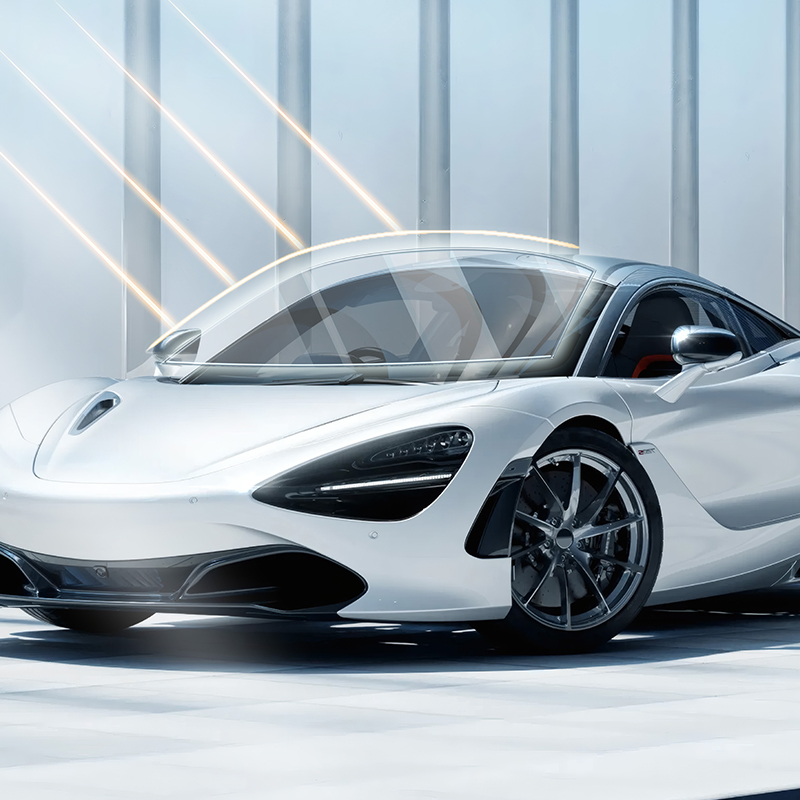 J70 Nano Ceramic Windshield FilmNano-ceramic windshield film with 72% VLT, 99% UV blocking, 2mil safety structure, and stated non-interference with vehicle signals.View Product →
Not all ceramic films are equal. A cheap ceramic label can still produce haze, uneven color, or a short service life. A good ceramic windshield film should be optically clear, compatible with cameras and sensors, and installed by a technician who understands curved glass. Current-generation ceramic films are more consistent than early versions, but the installer still determines the first-month result.
Ceramic vs regular tint: side-by-side comparison
| Feature | Ceramic tint | Regular tint |
|---|---|---|
| Heat rejection at same VLT | Usually higher, often 45-60% TSER | Usually lower, often 25-40% TSER |
| Infrared rejection | Often 80-95% in published specs | Often 20-40% in dyed products |
| UV rejection | Typically about 99% | Often 95-99%, but check the spec |
| Clarity and haze | Low haze when manufactured well | Good on quality dyed film, variable on cheap film |
| Color stability | Holds color longer | Dye can fade or shift purple |
| Signal interference | Low, because most ceramic films are non-metal | Higher risk with metallized films |
| Glare control | Good at higher VLT | Often needs darker VLT for similar comfort |
| Upfront cost | Higher | Lower |
| Best use | Long ownership, hot climate, outdoor parking | Short ownership, budget build, mild climate |
Heat rejection: where the gap shows up
Infrared is where the gap is easiest to see. A car parked in direct sun gains heat through the glass, the roof, and the body. Tint mainly affects the glass. Published product data from film manufacturers often puts ceramic total solar energy rejection in the 45-60% range and dyed films in the 25-40% range at similar VLT. Infrared rejection claims can run from 80-95% for ceramic and 20-40% for dyed products, but test methods differ, so compare the same standard.
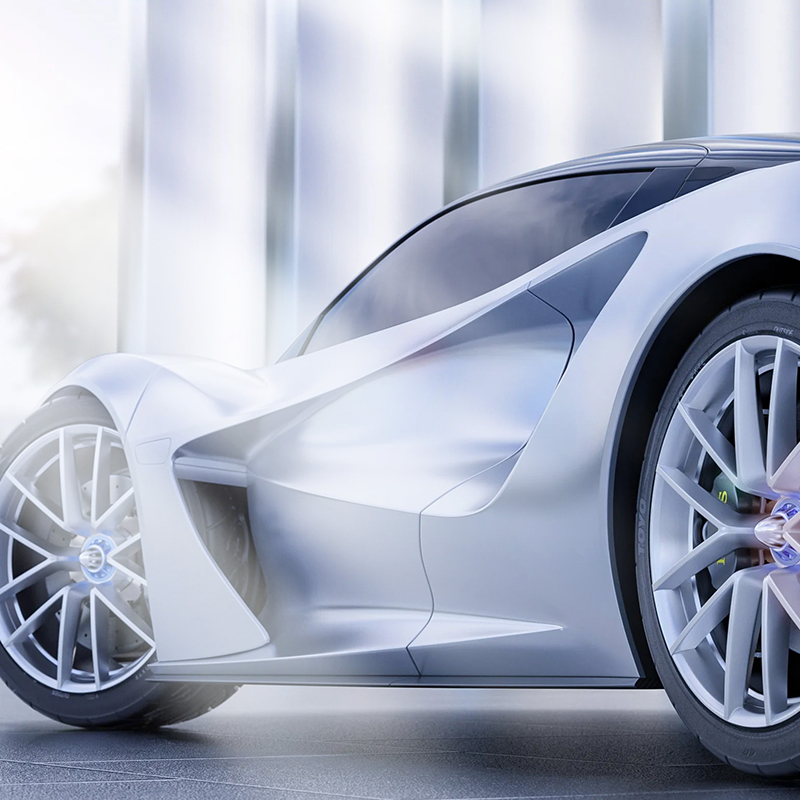 J30/J15 Nano Ceramic Side and Rear FilmSide and rear nano-ceramic film offering 99% UV blocking, 45–50% total solar energy rejection, and multiple tint shades for cabin comfort.View Product →
The practical effect is that a ceramic film can keep the cabin more comfortable at a lighter VLT. That matters for night driving and for side glass where you still need to see mirrors and cyclists. A dark dyed film may feel cool for the first ten minutes, but heat soak can build because the film absorbs energy instead of managing infrared. For a deeper look at VLT and heat rejection numbers, see this window film types and VLT guide.
- Compare TSER, not just IR rejection. TSER covers the full solar spectrum.
- Compare the same VLT. A 5% dyed film and a 50% ceramic film are not a fair test.
- Ask for a sample on glass. Meter readings in a shop can differ from real sunlight.
Clarity, haze, and night driving
Clarity is not automatically better just because a film says ceramic. Haze comes from poor particle dispersion, low-grade polyester, or a bad adhesive layer. A quality dyed film can be very clear. A cheap ceramic film can look milky in low light. The category tells you what the film is designed to do. The manufacturing and installation tell you what it actually does.
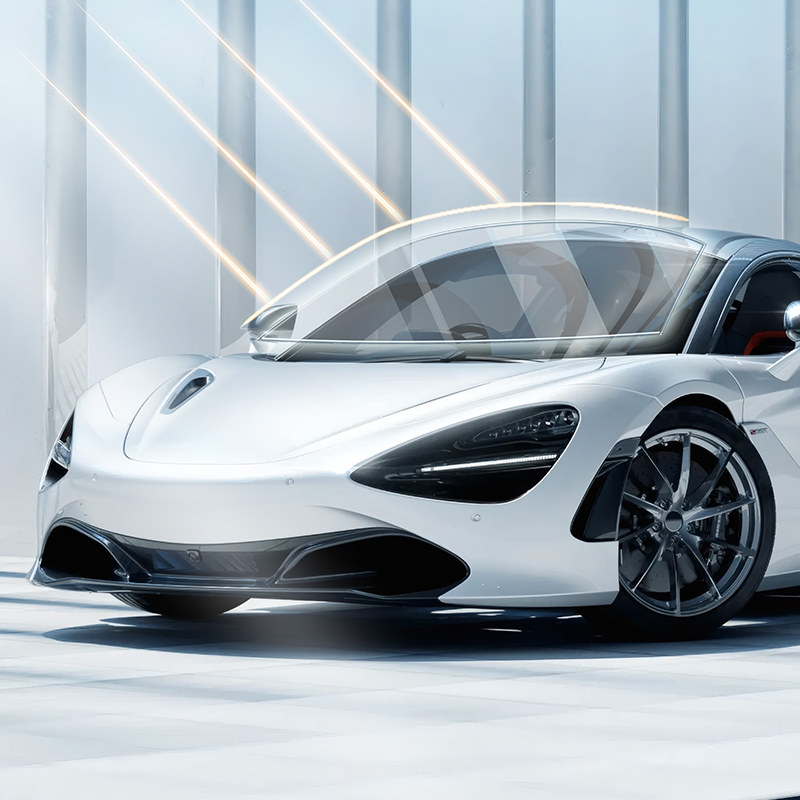 Ginnva M70e 4mil Nano Ceramic Windshield FilmFour-mil nano-ceramic windshield film with 70% VLT, 99% UV blocking, 48% total solar energy rejection, and non-metal signal compatibility.View Product →
For night driving, VLT matters more than the film label. Lower VLT reduces side mirror visibility, especially in rain or on unlit roads. A 4 mil ceramic windshield film adds thickness for glass retention and heat control, but it must be installed by a technician who can handle curved glass, defroster lines, and camera brackets. A thick film with a poor install is worse than a thin film with clean edges.
- Check haze on a small sample against a white sheet of paper.
- Look through the film at a 45-degree angle, not just straight on.
- Ask how the film handles night glare from headlights and wet roads.
Color stability and long-term looks
Dyed film fades because the dye is consumed by UV and heat. Purple or brown shift is common on low-cost dyed films after a few strong summers. Ceramic films use inorganic particles, so the color holds better. That does not make them immortal. Adhesives, UV absorbers, and installation quality still age. A ceramic film that is stretched too far or installed over contaminated glass can fail early even if the film itself is good.
- Installer field reports often show cheap dyed film shifting color in 2-4 years under strong sun.
- Quality ceramic film usually keeps its color longer, but the adhesive and top coat still matter.
- Published film life claims vary widely, so read the care and installation FAQ before you compare a 3-year dyed film with a longer-life ceramic film.
Cost: what you actually pay for
Cost is the main reason people choose regular tint. Based on 2025-2026 U.S. installer price surveys, a full-vehicle dyed tint often runs about $150-$300, ceramic runs about $250-$500, and premium ceramic with high TSER and longer film life can reach $600 or more. Labor is a large part of the bill, often 40-60% of the total. That is why the same film can cost very different amounts in two cities.
- Film cost: ceramic particles and tighter coating control usually cost more than dyed polyester.
- Labor: curved windshields, defroster lines, and camera brackets take more time.
- Risk: a cheap install with dust or lifting edges costs more to fix than the film upgrade.
A $200 difference over five years is about $40 per year. If you keep the car and park outside, that can be easy to justify. If you sell in two years, the ceramic premium may not return in resale value. Buy ceramic for the comfort and appearance you will use, not as an investment you expect to recover.
Installation quality beats the label
A $500 ceramic job with dust nibs, lifted edges, and a hazy windshield is worse than a $250 dyed job with clean prep and sharp shrinkage. Installation is where most tint complaints start. The film cannot fix poor glass prep, contaminated water, or a technician who rushes a curved windshield.
- Prep: glass should be scrubbed, rinsed, and inspected under strong light.
- Shrink: curved glass needs controlled heat shrink to avoid fingers and lift lines.
- Cure: small water pockets can be normal at first, but large bubbles are not.
Ask to see a finished car, not just a sample board. Check the edges, the defroster lines, and the view through the windshield at night. A good installer will explain cure time and give clear aftercare steps without pressure.
Which should you choose?
Match the film to the glass and the owner. A ceramic windshield film makes sense if the car has a large glass area, a dark dashboard, and a driver who wants heat control without going very dark. A regular dyed film can be enough for rear glass on a budget car that is parked under cover. The worst choice is a dark film on the windshield because it looks cool in the shop and becomes a liability at night.
- Pick ceramic for long ownership, hot climate, outdoor parking, or a light VLT that still needs heat control.
- Pick regular for a short lease, mild climate, garage-kept cars, or a rear-glass-only job where price leads.
- Pick the installer first if the quote is unusually low, the shop cannot show finished work, or the film sample looks hazy.
Frequently asked questions
Is ceramic tint worth the extra cost?
For a car kept three or more years in a hot climate, yes. The extra $100-$250 often buys better heat rejection at a lighter VLT, less fading, and lower haze. For a two-year lease or a garage-kept weekend car, regular dyed film can be enough.
Does ceramic tint block more heat at the same darkness?
Usually yes. At the same VLT, ceramic film typically has higher TSER and infrared rejection. But compare the same test standard. A very dark dyed film can feel cooler than a light ceramic film simply because less visible light enters the cabin.
Will ceramic tint block phone, GPS, or toll signals?
Most ceramic films are non-metal and carry low signal risk. Metallized regular films are the ones that can interfere. If you use a toll transponder or weak GPS, ask for a non-metal film and test the placement before the final install.
Why does regular tint turn purple?
Cheap dyed films use organic dyes that break down under UV and heat. The color shifts to purple or brown as the dye fades. Ceramic particles are inorganic and more color-stable, though adhesive quality and installation still affect film life.
Is ceramic tint darker than regular tint?
No. Darkness is set by VLT, not by film type. A 50% VLT ceramic film and a 50% VLT dyed film let in the same amount of visible light. The ceramic film may reject more heat at that same VLT, but it is not darker by default.
Can ceramic tint be used on a windshield?
Yes, optically clear ceramic windshield films are common. They are used for heat and UV control with high VLT. Installation quality matters because the windshield is curved and often has cameras or sensors. Choose a film with low haze and a technician who has finished work you can inspect.
Final take
Ceramic tint is the better long-term product for heat, clarity, and color stability, but regular tint still has a place. The right choice depends on climate, ownership length, budget, and installation quality. Compare the same VLT and the same test standard, then decide with a sample in your hand, not a label on a box.
Ginnva Auto Film manufactures ceramic window film for windshield and side and rear applications, and the same rule applies across the line: judge the film by measured performance, optical clarity, and installation support, not by the word ceramic alone.
We provide customers with sustainable and eco-friendly adhesives, Automotive Film, customized material solutions and comprehensive technical services.
 Download
Choose Ginnva Auto Film for the perfect blend of performance and aesthetics.

- ADD: 17Floor, Buillding 8,G60 Ke Chuang corridor,No288, Qian Fan Road, XinQiao Town,Songjiang District, Shanghai, China
- Whatsapp: 8618041123913
- Email: info@ginnvafilm.cn
Copyright © Ginnva Auto Film Rights Reserved. China vehicle protective film factory custom automotive film manufacturer
